Flashcards
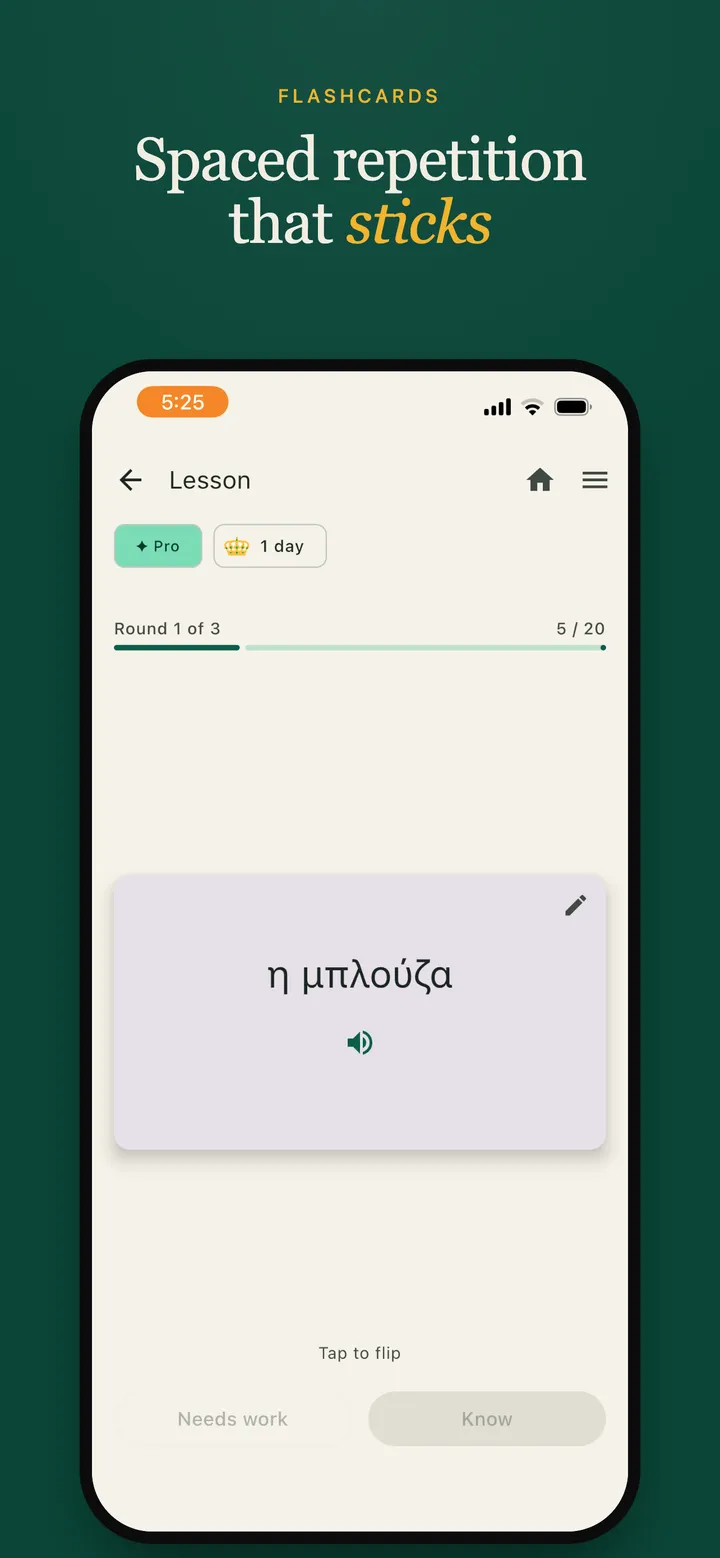
Spaced repetition (SRS), built-in vocabulary by CEFR level, and import for your own decks — plus unlimited custom cards for free.
Flashcards, reading, listening and writing with instant feedback — one focused app for people serious about the language.
★ 5.0 on the App Store

Free browser game
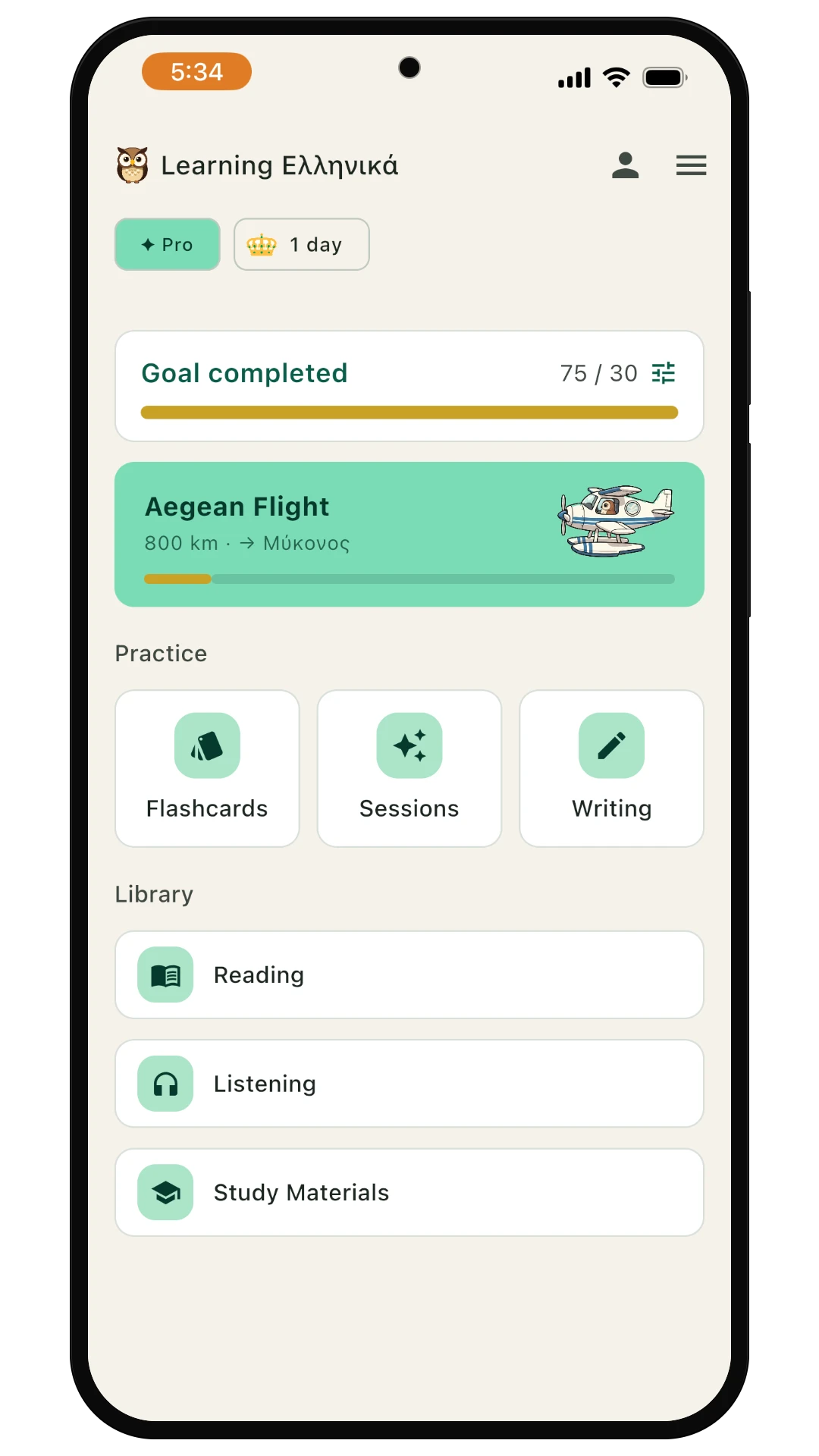
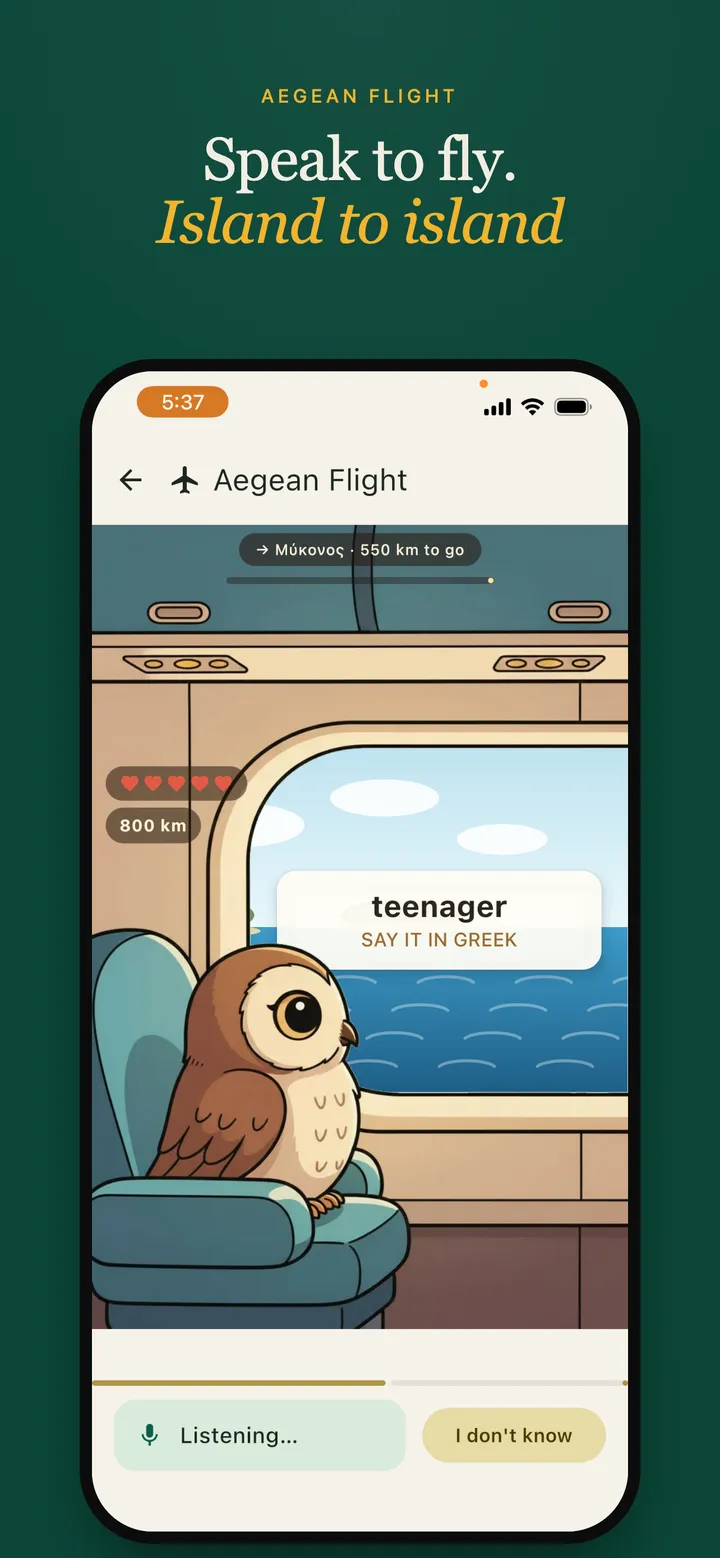
See a translation, say the Greek word out loud — the owl hops from Athens across the islands while you remember. Speech recognition runs right in your browser.
Play in the browser →Six tools that work together — not six separate apps
Spaced repetition (SRS), built-in vocabulary by CEFR level, and import for your own decks — plus unlimited custom cards for free.
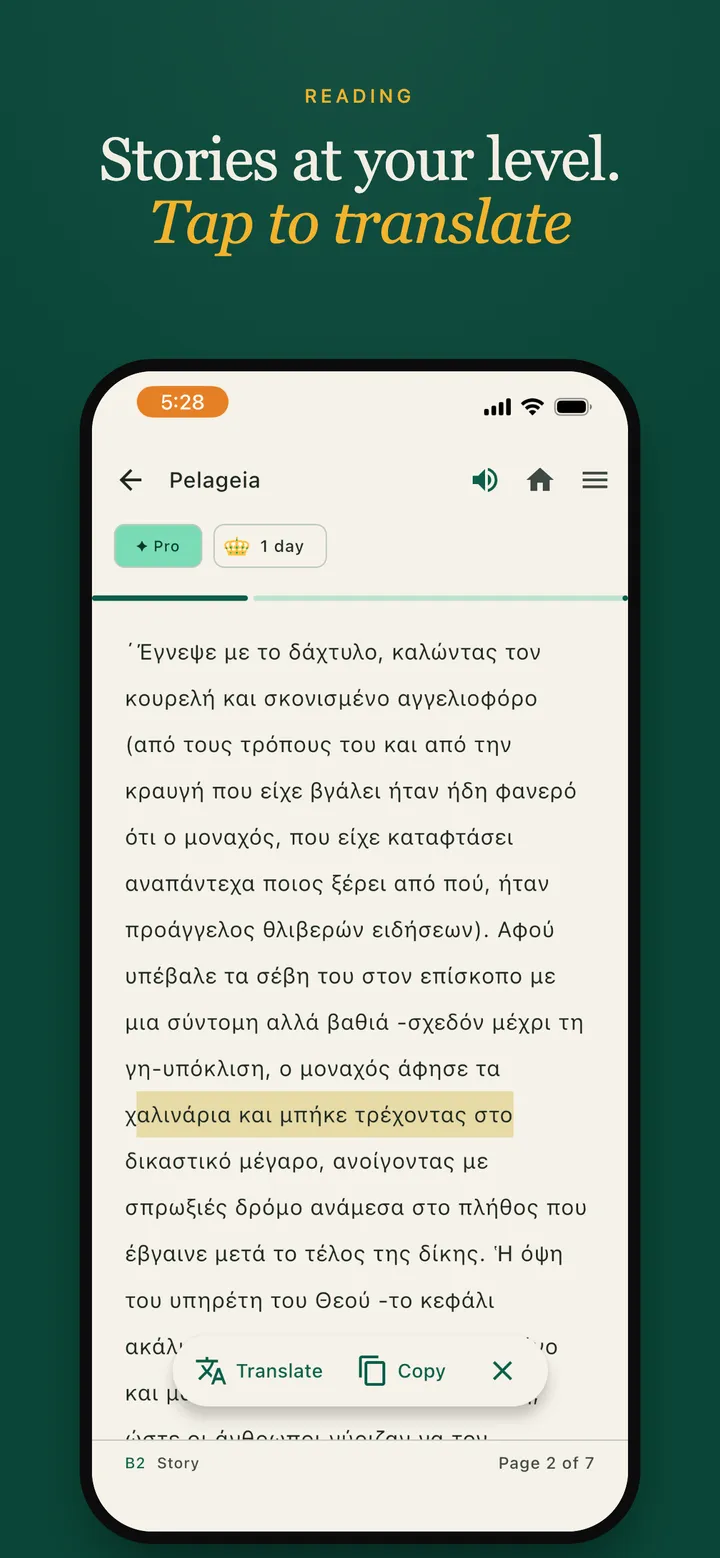
Write your own texts, upload files, OCR from a photo, or generate a passage at a CEFR level. Reader with page scrolling and text-to-speech.
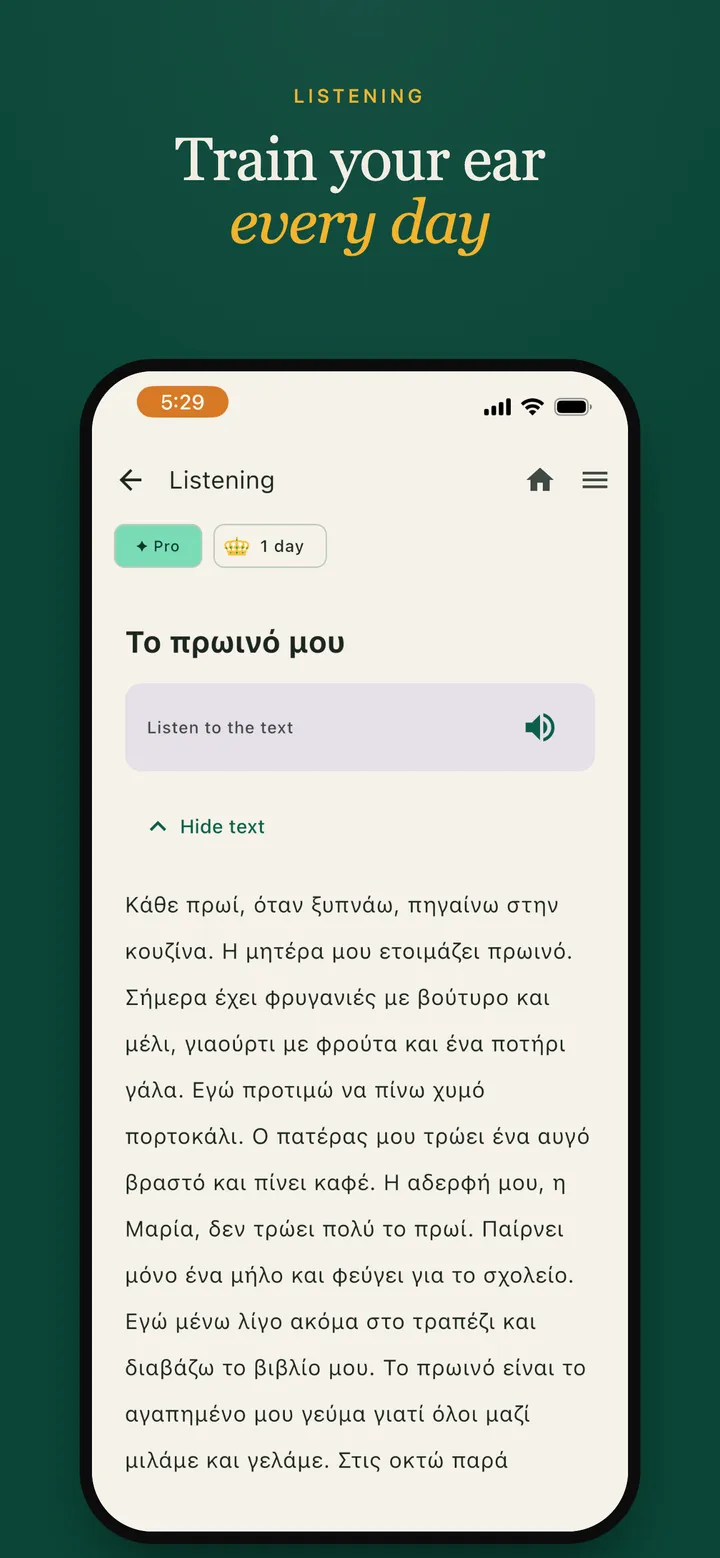
Generate a text at your level, listen, then take a comprehension quiz with answers. Save it and come back later.
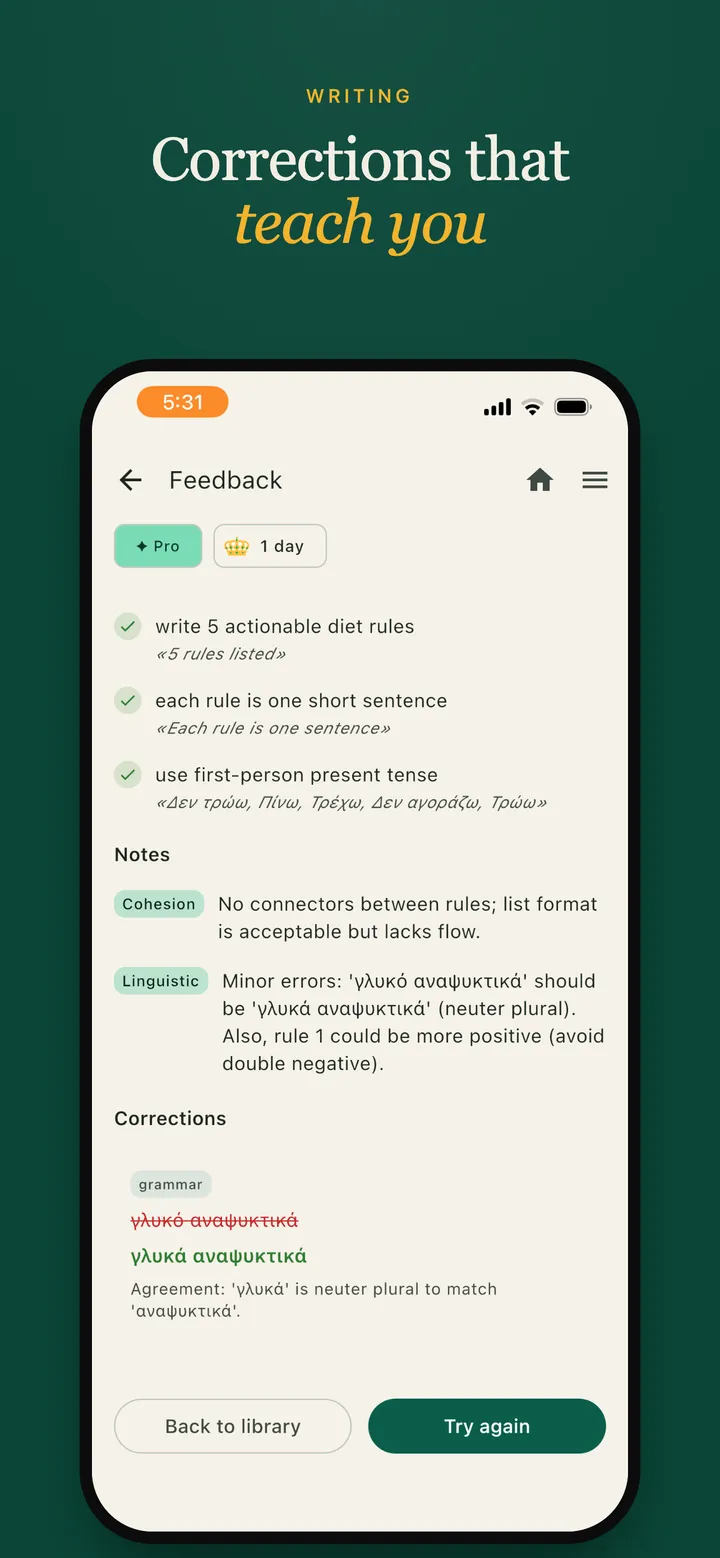
Write a short text or letter and get corrections inline, plus scores for communication, grammar, vocabulary and cohesion.
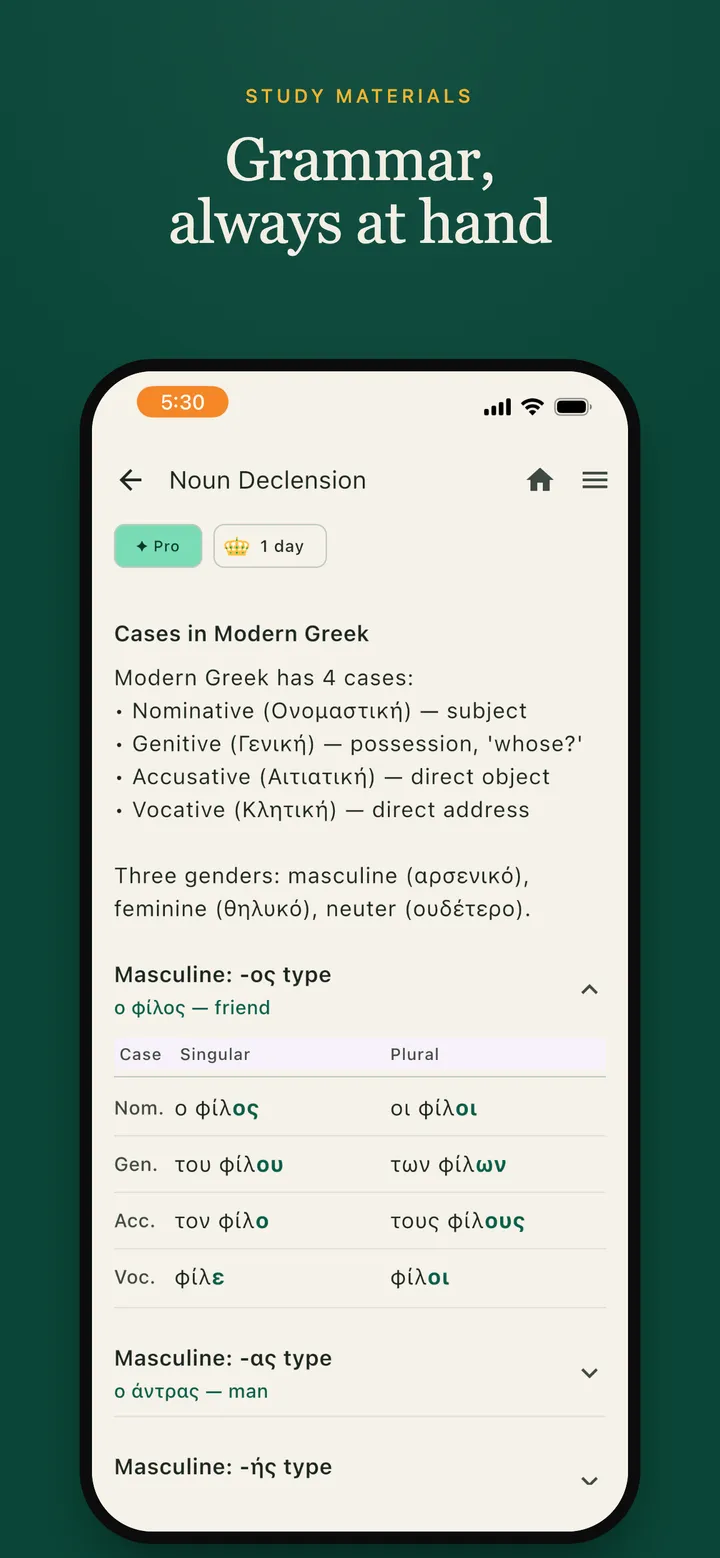
Grammar cheat sheets you can reach for any time — and they keep growing.
A guided flow that ties flashcards, reading, listening and writing into one daily practice.
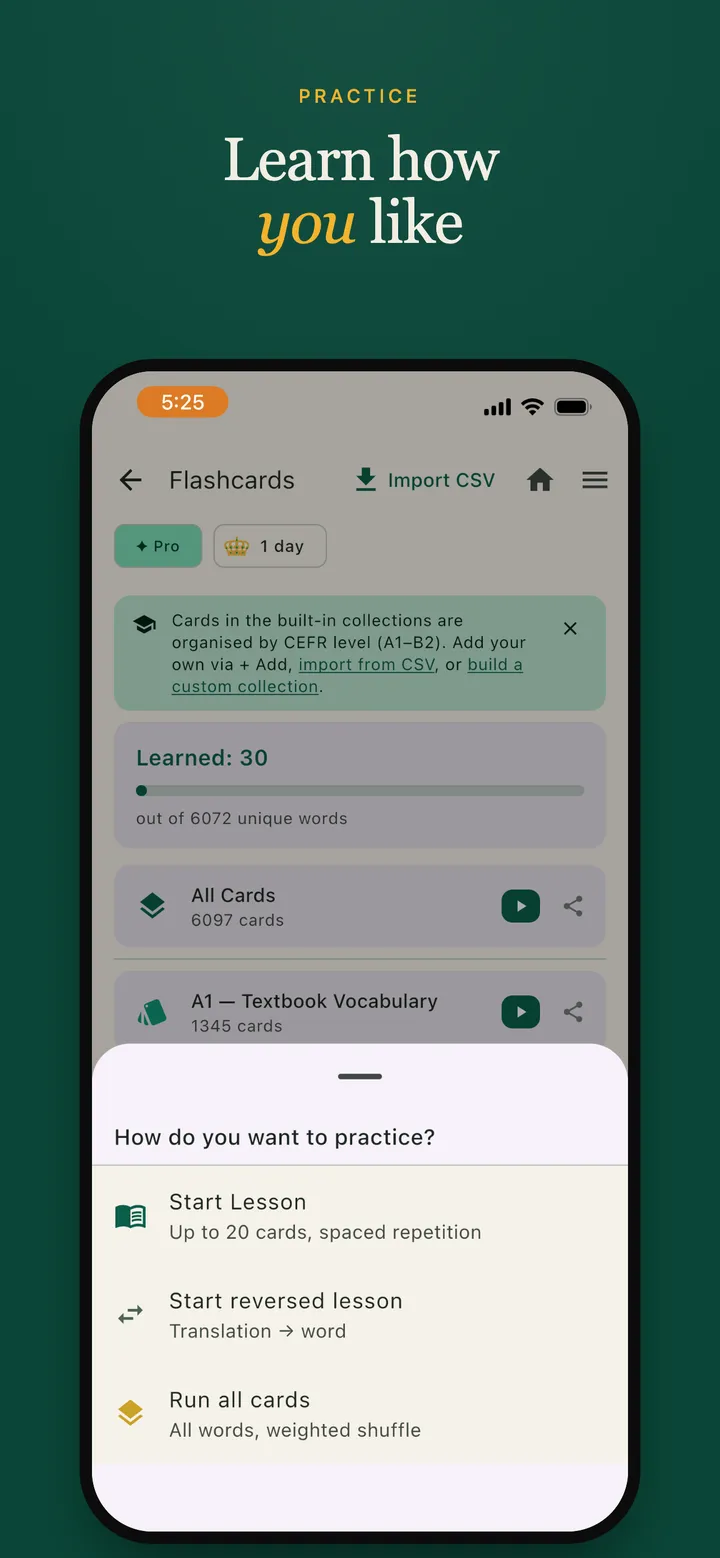
Start anywhere from A1 to B2 — built-in decks and materials are organised by CEFR level.
Spaced repetition adapts to you; daily goals and streaks keep you showing up.
Write at your level and get feedback with corrections and scores — the part most apps skip.
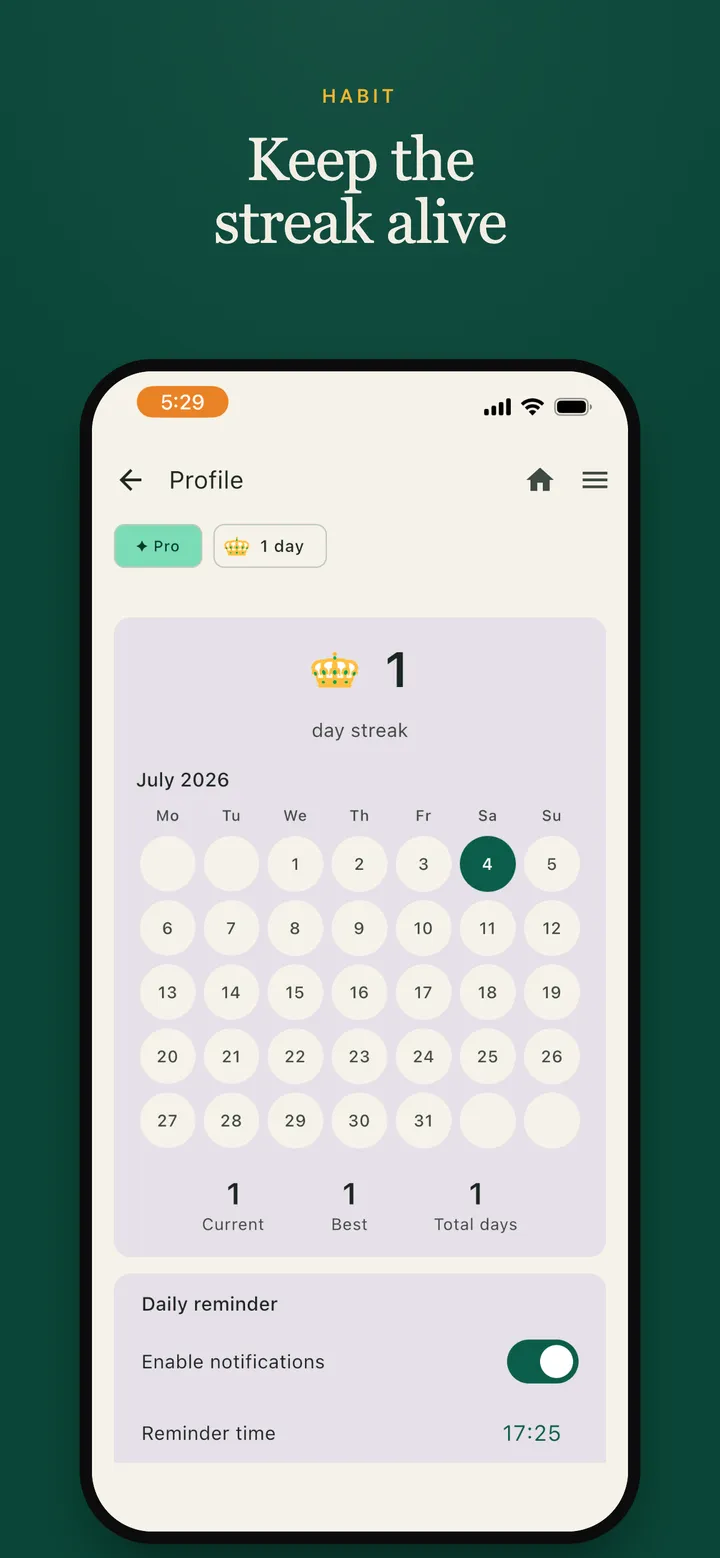
Set a goal that fits you and keep a streak — small nudges that help you show up every day.
Report a bug, flag a wrong translation or suggest a feature, right from the app. We read everything.
Free, unlimited custom flashcards and an easy deck import — your vocabulary stays yours.
Short, practical guides to getting started with Greek.
The best way to learn Greek isn't a secret method — it's daily practice across all four skills, with real production. Here's the approach that works, the tools that help, and the best app for it.
Is Greek hard to learn? A clear look at the alphabet, grammar and pronunciation — what's actually difficult, what's easier than you think, and how to start.
Which Greek level you need for Cyprus residency and citizenship, how the Ελληνομάθεια certification exam works, how long A2 and B1 take, and how to prepare.
What the Πιστοποιητικό Επάρκειας Γνώσεων για Πολιτογράφηση is, who is exempt, how its four parts work, and where to get official past papers with answers for free.
A realistic timeline for learning Greek: the FSI hours, how long to reach A1–B2, what changes your pace, and the tools that actually get you there.
The 24 letters of the Greek alphabet with names and pronunciation, the reading rules (diphthongs, consonant clusters, γ/χ) and the false friends to watch for — the fastest first step in Greek.
A no-nonsense first-steps guide for total beginners: the order that actually works — alphabet, high-frequency words, input, then speaking — what to skip, and how long it really takes.
What A1, A2, B1 and B2 actually mean for Greek — the can-dos, the grammar each level covers, roughly how long each takes, and which level you actually need.
Greek has its own alphabet and a few unfamiliar grammar points, but it's very learnable with steady practice — most people read the alphabet within a week. The app breaks the path into A1 → B2 steps so it never feels overwhelming.
It depends on your goal and pace. A solid A2 (everyday conversations) usually takes a few months of daily practice; B1–B2 takes longer. Daily goals and spaced repetition keep you moving.
Yes — free to download, with unlimited custom flashcards and core study. The generation and feedback features have a free allowance, with an optional Pro upgrade.
Yes — import your own decks (a simple CSV format) alongside the built-in ones.
Both — the same app and content on either platform.
No. Your cards and progress live on your device.
Flashcards and your saved material work offline. Generation, translation and writing feedback need a connection.
Free to download. A1 → B2. iOS and Android